


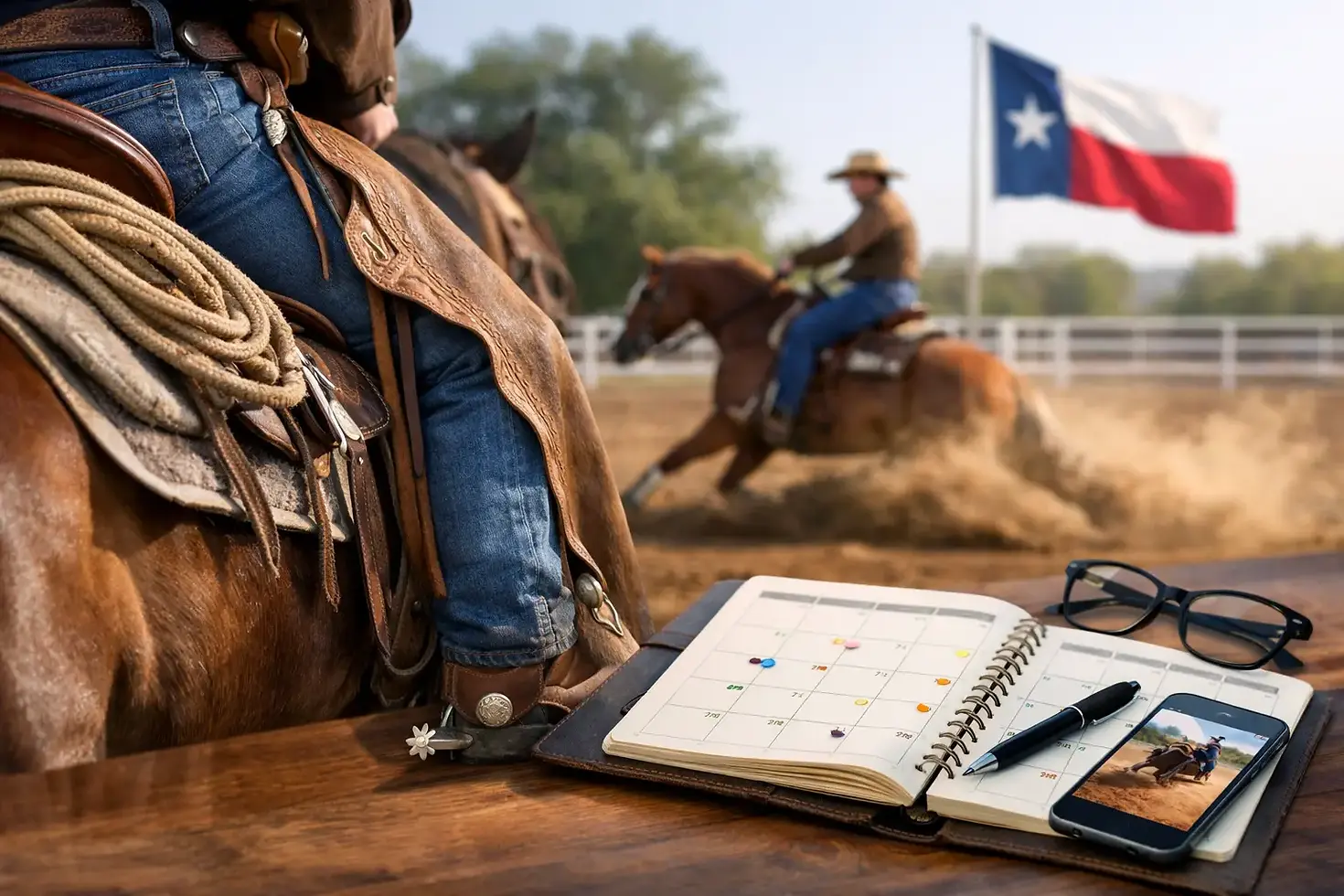
Texas Reining Event Calendar That Works
- THIA

- 14 hours ago
- 6 min read
When a Texas rider misses an entry deadline by two days, it is rarely because the show lacked importance. More often, it is because the information was scattered across association pages, social posts, arena announcements, and word of mouth. A dependable texas reining event calendar matters because it helps competitors, trainers, owners, and the businesses around them plan a season with fewer surprises and stronger turnout.
Reining is not a small niche in this state. It touches breeding programs, training barns, feed suppliers, haulers, veterinarians, farriers, arenas, hospitality businesses, and local communities that benefit when riders and families fill stalls and hotels for a weekend. In Texas, event visibility is not just a convenience. It is part of how the broader horse industry stays connected, economically active, and represented.
Why a Texas reining event calendar matters statewide
A strong calendar does more than tell riders where to be on Friday morning. It helps owners decide where to campaign a horse, lets trainers manage travel and conditioning, and gives families a realistic view of costs and time on the road. It also supports show producers who need consistent promotion and early entries to run efficient events.
For the wider equine economy, better calendar coordination can mean better participation. If reining dates are easy to find and posted early, businesses tied to the sport can prepare inventory, staffing, and services. That includes everything from bedding vendors and photographers to veterinary support and fuel stops. Texas has one of the most diverse horse sectors in the country, and every discipline that stays organized strengthens the larger case for the industry’s value.
There is also a policy angle. When lawmakers and civic leaders see active facilities, full trailers, and recurring competitions across regions, they see an industry that produces commerce, jobs, and tourism. Event activity becomes part of the broader evidence that horses are a serious agricultural and economic force in Texas, not a side interest.
What belongs on a Texas reining event calendar
A useful calendar is not just a list of dates. It should answer the questions that matter before someone hooks up a trailer or sends in payment. At minimum, each listing should include the event name, host organization, city, venue, start and end dates, and whether the show is approved by a major reining body or a local affiliate.
It should also note details that affect participation decisions, such as entry deadlines, late fees, jackpot classes, youth and non pro divisions, ancillary classes, and whether there are added-money opportunities. For many barns, stall reservations, RV hookups, and office contact information are just as important as the class list.
The best event calendars also distinguish between major destination shows and local or regional circuits. Both matter. A large show can anchor a season, but smaller affiliate events often keep horses and riders competing consistently, especially for those balancing school schedules, ranch responsibilities, or limited travel budgets.
Where Texas reiners usually find dates
Most reiners build their season from several sources rather than one master schedule. National and affiliate reining associations often publish approved events first. Individual show producers may post details earlier than associations update their pages. Arenas and equestrian centers sometimes release date holds long before complete prize lists are available.
That creates a trade-off. The earliest information is useful, but it is not always final. Dates can shift because of facility conflicts, weather recovery, or sanctioning adjustments. That is why a working calendar should be treated as a living planning tool, not a static document.
For Texas participants, the smartest approach is to cross-check major dates across associations, producers, and venues. If a listing appears in only one place and key details are missing, it may be too early to build firm travel plans around it. If the event is showing up consistently across several channels, confidence goes up.
How to use the texas reining event calendar strategically
The difference between a busy season and a productive season often comes down to planning. A texas reining event calendar is most valuable when riders and businesses use it early and with purpose.
Competitors should start by separating must-attend events from optional ones. A trainer with futurity prospects may build around larger money classes and higher-level competition. A weekend non pro may prioritize shorter drives and affiliate points. A youth rider may need a schedule that avoids school conflicts and allows time for horse changes or qualification requirements.
Owners and breeders can use the calendar differently. They may look for events where prospects can be seen by buyers, where stallion offspring are likely to be shown, or where regional visibility supports a sales program. For them, event timing connects directly to marketing and return on investment.
Local businesses should pay attention as well. Feed stores, mobile repair services, horse hotels, and veterinary providers benefit when they know which weekends will concentrate horse traffic in their region. Calendar awareness helps them stock appropriately, staff correctly, and participate as sponsors or exhibitors when it makes business sense.
Timing, geography, and the Texas factor
Texas is big enough that one state calendar can hide real logistical challenges. A show in North Texas may be routine for one barn and a major haul for another. That is why geography matters as much as date.
Seasonal timing matters too. Spring and fall often offer favorable travel and competition conditions, while summer schedules can require more caution around heat, horse management, and hauling stress. Winter shows may be attractive for some barns because they set up a longer campaign, but weather and holiday timing can complicate entries.
This is where practical planning beats optimism. A full calendar looks exciting in January, but not every program should chase every opportunity. Some horses improve with frequent showing. Others need longer gaps between runs. Some operations have the staff and budget to run statewide. Others are better served by a tighter radius and a more selective schedule.
What makes a calendar trustworthy
A calendar becomes valuable when it is current, specific, and disciplined about updates. Old listings erode confidence fast. So do vague event notices with no producer name, no location, or no indication of whether the show is confirmed.
Reliable calendars usually share a few qualities. They update promptly when dates change. They identify the organization or producer behind the event. They make room for corrections. And they avoid presenting rumor as fact.
That matters for the reputation of the sport as much as for convenience. When information is clear, new participants are more likely to enter. Owners who are less involved in daily horse management can follow the season more easily. Industry stakeholders outside the arena, including community leaders and policymakers, can see organized activity rather than fragmentation.
Reining calendars and the bigger Texas horse industry
Reining does not stand alone. It is part of a broader statewide horse economy that includes breeding, ranch work, showing, veterinary services, transportation, land use, hay production, and hospitality. Every well-promoted event contributes to that larger network.
That is why calendar visibility is more than an administrative task. It is an industry-strength issue. Full schedules and strong attendance show that Texas facilities are active, that horse owners are investing, and that equine events continue to generate movement across rural and urban communities alike. For an advocacy-minded organization such as Texas Horse Industry Advocates, that kind of visible participation supports the case for policies and priorities that keep the industry viable.
There is also a community benefit. Reining brings together youth exhibitors, long-time professionals, ranch families, breeders, sponsors, and first-time spectators. A clear event calendar helps those groups find each other. It gives newcomers an entry point and gives established participants a better way to stay engaged.
Keeping your season organized without overcommitting
The best riders and horse businesses in Texas usually do not win on scheduling volume. They win on scheduling discipline. A smart calendar helps identify where competition level, cost, travel, and horse readiness line up.
That may mean circling only a handful of priority shows and treating the rest as conditional. It may mean choosing one major series and two local affiliates instead of trying to cover the whole state. It may also mean passing on a high-profile event if the horse is not ready, because one poorly timed trip can cost more than it returns.
A good calendar should support that kind of judgment. It should make options visible without pressuring participants into a packed season that does not fit their goals, budget, or horse care standards.
Texas reining is strongest when the path to participation is clear. If dates are easy to find, details are accurate, and the season is mapped with intention, riders compete more confidently, producers promote more effectively, and the businesses around them can plan ahead. In a state where horses remain part of both our heritage and our economy, a better calendar is a practical way to keep the entire industry moving forward.


Comments