


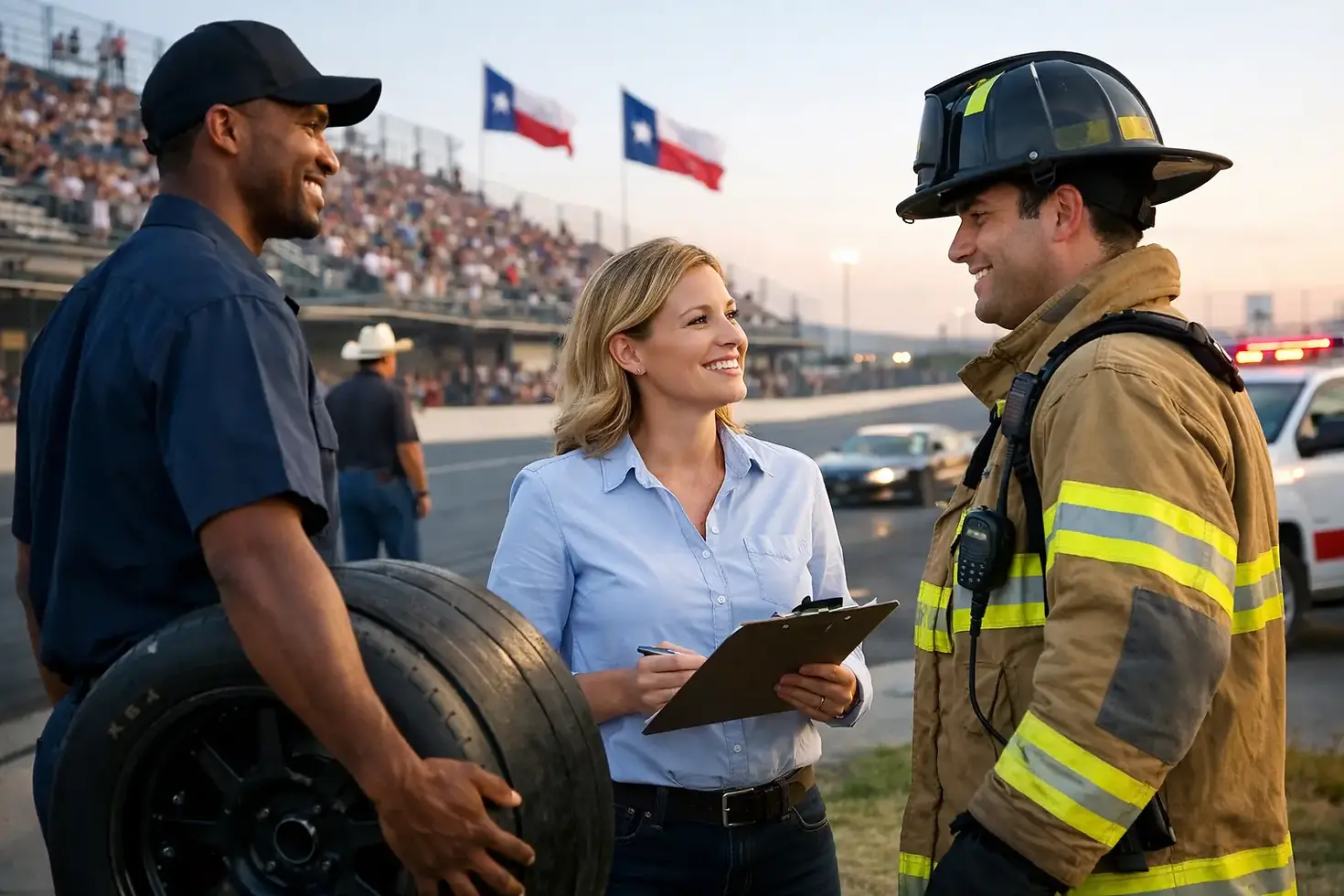
How Racetrack Jobs Support Communities in Texas
- THIA

- 8 hours ago
- 5 min read
A racetrack payroll does not stop at the stable gate. It travels to feed stores, veterinary clinics, local restaurants, truck repair shops, hotels, farms, and family homes across Texas. That is the practical answer to how racetrack jobs support communities: racing creates work for a wide network of Texans whose livelihoods depend on horses, agriculture, events, and the commerce that connects them.
For a state built on working land, entrepreneurship, and a proud horse heritage, racetracks are more than entertainment venues. They are employment centers and market hubs. When racing is active, horses must be bred, raised, trained, transported, housed, cared for, and safely competed. Each stage requires skilled people, dependable businesses, and local investment.
Racetrack Jobs Support Communities Far Beyond Race Day
The most visible jobs at a racetrack are the ones fans see on the grounds: jockeys, trainers, grooms, exercise riders, outriders, racing officials, mutuel clerks, security personnel, track maintenance crews, hospitality staff, and admissions workers. Those jobs matter, but they represent only part of the employment picture.
A racehorse in training creates recurring demand long before it enters the starting gate. Owners purchase hay, grain, bedding, tack, medications, farrier services, veterinary care, insurance, and transportation. Trainers hire barn staff. Breeders and farms employ people to manage mares, foals, stallions, pasture, fencing, equipment, and records. A healthy racing calendar gives these businesses a reason to plan, hire, and reinvest.
That ripple effect is especially meaningful in communities where agricultural work is central to the local economy. A hay producer may sell to training barns. A local welding business may repair gates and trailers. A rural fuel supplier may serve hauling operations. A small accounting firm may assist horse businesses with payroll and compliance. Racing supports a chain of commerce that reaches well beyond the grandstand.
The stable area is a skilled workforce
Horse racing depends on specialized knowledge that cannot be replaced by a generic labor force. Good horsemen and horsewomen understand conditioning, soundness, nutrition, behavior, safety, and barn management. Farriers, veterinarians, technicians, equine dentists, transporters, and track surface specialists bring distinct professional skills to the industry.
These careers also create pathways for young Texans and working families. A person may begin by walking hots or helping in a barn, then build experience as a groom, assistant trainer, rider, manager, or business owner. The industry rewards hard work, responsibility, and practical expertise. When opportunities remain available in Texas, more of that talent can stay, build careers, and contribute to their home communities.
Racing Sustains Texas Horse Farms and Agricultural Land
Racing is closely tied to the breeding and raising side of the horse industry. For Texas breeders, a viable racing market gives horses a purpose, supports demand for quality bloodlines, and helps make the long-term investment of raising horses more economically realistic.
Breeding is not a one-season activity. It involves years of planning and daily care. Farms need labor, feed, equipment, veterinary support, and dependable service providers throughout the year. That steady activity supports rural economies even when a race meet is not underway.
The connection also matters for land stewardship. Horse farms help keep agricultural land in productive use, maintain open space, and preserve a visible part of Texas culture. This does not mean every farm is profitable or that every racing-related investment carries the same return. Weather, feed costs, insurance, labor availability, and market conditions can put real pressure on horse operations. But a functioning racing ecosystem gives farms more options than they would have without it.
Incentives affect decisions made on Texas farms
Race dates, purses, breeding programs, and regulatory policy can influence where owners and breeders choose to invest. If opportunities are limited or uncertain, horses, money, and jobs may move across state lines. The loss is not confined to a racetrack. It can be felt by farms, veterinarians, feed suppliers, and local communities that lose customer demand.
Conversely, policies that encourage responsible, well-regulated racing can help retain equine investment in Texas. The objective is not simply to fill grandstands. It is to support an accountable industry that keeps horses in good care, sustains agricultural employment, and provides legitimate economic opportunity across the state.
Local Businesses Benefit When Racing Is Active
Race meets bring people together from different regions. Owners, trainers, families, vendors, officials, and fans need places to eat, sleep, shop, fuel vehicles, and conduct business. In communities near racetracks, that activity can support hotels, restaurants, convenience stores, rental companies, and other local employers.
The benefit varies by location and by the scale of a meet. A large event may create a clear surge in overnight stays and restaurant traffic, while a smaller meet may matter most through its steady demand for local services. Either way, racing creates economic circulation. Dollars earned at the track are spent by workers and businesses in the surrounding community.
This is why racetrack employment should be evaluated as part of a larger economic system. Counting only direct jobs understates the role of racing. The trainer needs a feed delivery. The hotel needs housekeepers and front-desk staff. The feed store needs inventory and drivers. The veterinarian may hire technicians. Each transaction supports another layer of work.
A Community Asset Must Be Managed Responsibly
Advocating for racing jobs also means being honest about the responsibilities that come with them. The industry must maintain high standards for equine welfare, medication oversight, workplace safety, integrity, and financial accountability. Public confidence is earned through consistent rules, strong enforcement, and a visible commitment to the wellbeing of horses and people.
Communities should expect racetracks and racing participants to be good neighbors. That includes supporting local charitable efforts, maintaining facilities, respecting public safety, and building relationships with civic leaders and agricultural partners. When the industry operates responsibly, it strengthens its case as a lasting community asset.
There are trade-offs to consider. Racetracks require infrastructure, regulation, and public attention. Their economic impact can depend on the quality of the racing program, the broader economy, consumer interest, and policy certainty. No single venue can solve every local economic challenge. Yet dismissing racing as a narrow interest ignores the many working Texans connected to every horse that trains, ships, or races.
Why a Unified Voice Matters for Texas Racing
Texas is home to all breeds and all disciplines, and racing is part of that larger equine landscape. Quarter Horse, Thoroughbred, Paint Horse, and other racing interests share connections with breeders, ranchers, recreational riders, show competitors, veterinary professionals, and agricultural businesses. The strength of one sector can help sustain another through shared services, skilled labor, horse ownership, and public understanding.
That is why policy conversations should include the people who live the consequences: the barn employee, the breeder, the farrier, the hay grower, the veterinarian, the transport company, and the small business owner. Their work demonstrates that racing policy is also workforce policy, agricultural policy, and rural economic policy.
Texas Horse Industry Advocates believes the future of the horse industry depends on that broad understanding. When stakeholders speak together, they can better explain that horses are not a sideline to Texas life. They are part of the state’s identity and a source of real work, real commerce, and real community connection.
The next time racing is discussed in a public meeting, at the feed store, or around a family table, ask a practical question: who works because these horses are here? The answer will include far more Texans than most people realize. Supporting responsible racing means recognizing those workers, protecting the opportunities they have built, and making room for the next generation to carry Texas horse country forward.


Comments